Sheefan Media, with Ian
Launch a “Side Door Podcast” to interview and enroll dream clients
Paired with the Claude Skills that edit your episode, turn it into social media content and upload it everywhere, so your only job is one interview a week. It's how we've landed interviews with folks like Ryan Deiss.
Run interviews so good your guests post about them, like Maria did:
“I almost didn't do this interview… But something told me to say yes to this one, and wow, I'm glad I did.”

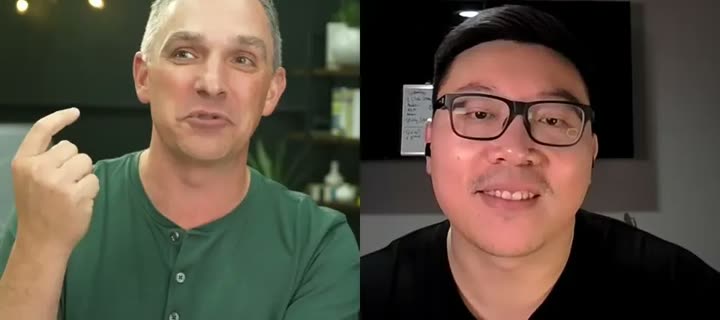 Ryan Deiss
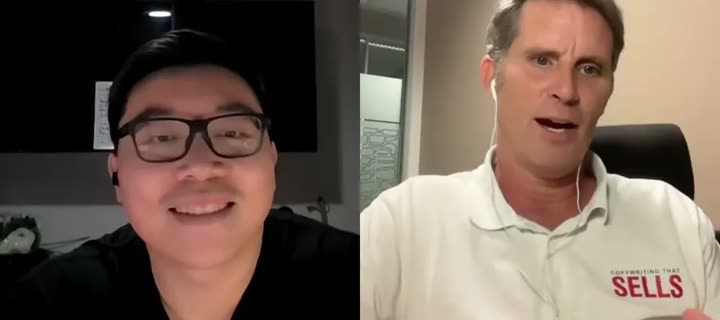 Scott Bywater
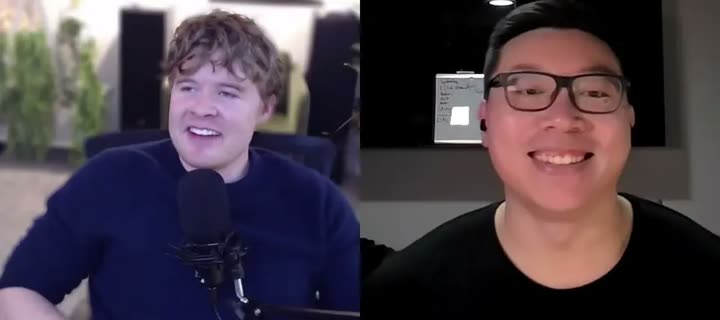 Angus Sewell
 Ron Forlee
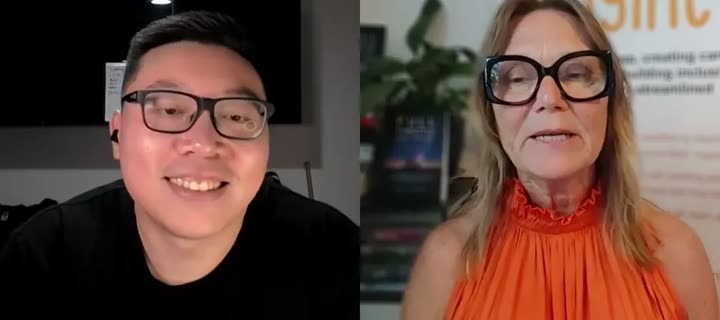 Gry Stene
 Alex Humado
You wrote the perfect message. They read it. Nothing.
It's Tuesday, 2pm.
You spend 20 minutes on the perfect LinkedIn message.
It's for someone you'd love to work with.
They read it.
Nothing.
A week later, you're back at a coffee catch-up.
With someone who'll never buy.
It's not your offer.
Your message hit The Pitch Wall.
Every message you send a stranger reads like a pitch.
So the people you want most never reply.
You're knocking on the front door.
And busy people never open it.
So use the side door
Ask for an interview, not a meeting.
People say yes to being featured.
They get to tell their story.
They walk away with a finished episode to share.
Ian puts it like this:
“You're not trying to cold pitch them, you're not trying to harass them, they're coming to chat.”
Why now? Two things changed.
First, every inbox is now a wall of pitches.
Outreach tools made a real message look the same as a fake one.
So a pitch is easier than ever to ignore.
An invite to be on a show stands out.
Second, AI made a podcast a one-person job.
The Claude Skills now edit, make the posts and upload.
As Ian says, “there's no excuse anymore.”
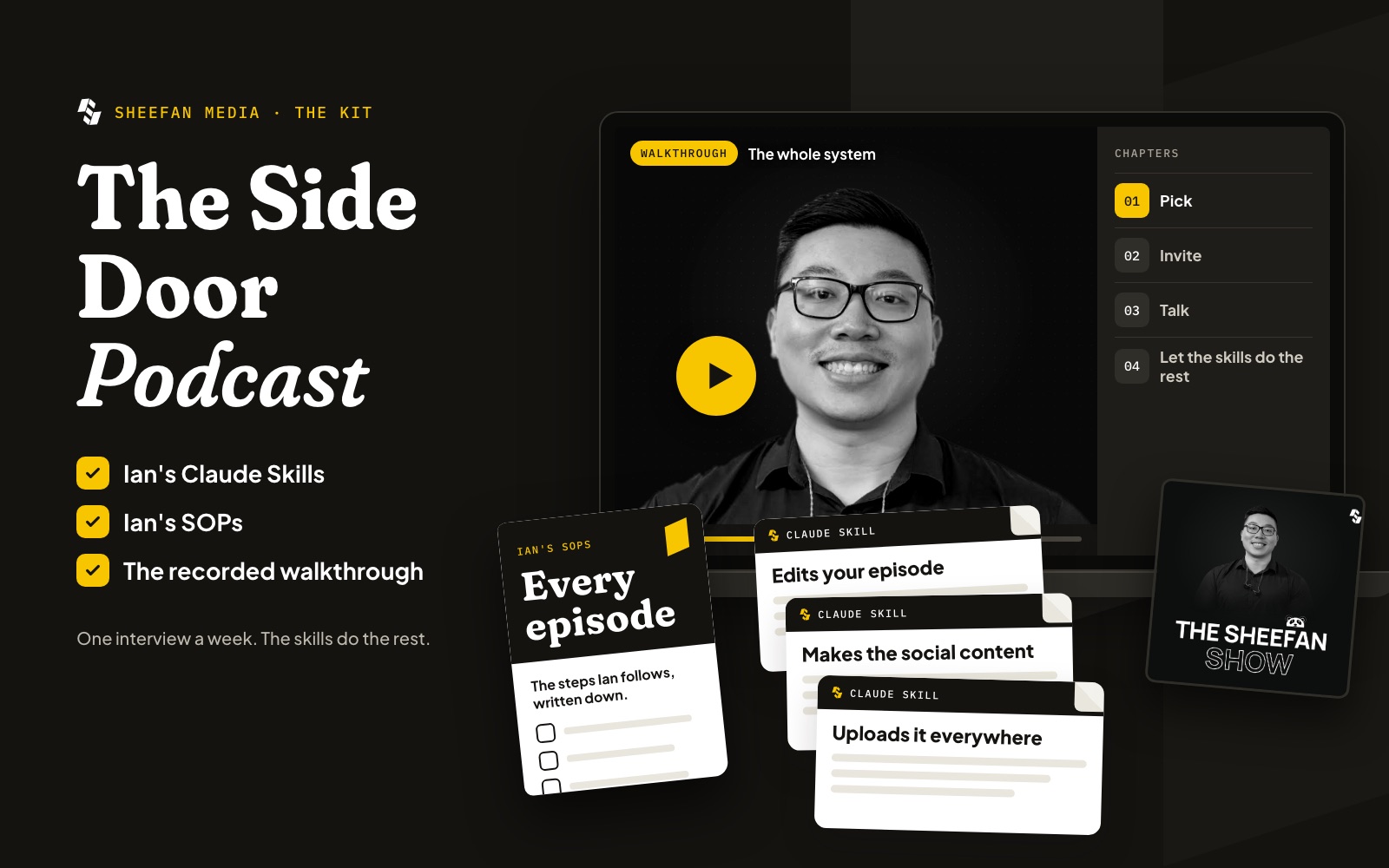
The Side Door Podcast
Ian's Claude Skills, Ian's SOPs and a recorded walkthrough of the whole system.
$47 USD · instant access
Your first yes within 72 hours of sending invites, or every cent back.
The old plan, and the new one
The old plan
- Buy leads, or send 50 cold messages a week.
- Follow up three times.
- Feel like a pest.
- Get one lukewarm call.
The Side Door Podcast
- Monday: pick who you want as a client.
- Tuesday: invite them on your show.
- Later that week: have the chat.
- The Claude Skills edit, post and upload it.
- Give first. The work talk comes after the recording.
One interview does three jobs
That's why it beats everything else out there.
A real conversation.With someone you'd love as a client.
They came to tell their story. So they talk.
Content.A finished episode and a week of posts.
The Claude Skills make them for you.
Referrals.A guest who's glad they said yes shares it.
Some introduce you to people they know.
Not every guest will.
But they remember a good conversation.
You saw Maria send hers to her whole list.
Guests have introduced Ian to people in their networks.
No other channel does all three in one conversation.
How it stacks up against everything else
Every way to get clients needs someone to say yes.
The question is who, and to what.
Swipe to compare →
| Way to get clients | Who you end up talking to | Who has to say yes | What's left after |
|---|---|---|---|
| Cold DMs | Whoever replies, if anyone | A stranger, to a pitch | A thread that says “Seen” |
| Ads | Whoever clicks | A stranger, to an ad | Leads while you keep paying |
| Posting every day | Whoever the feed shows it to | The algorithm, before anyone | Posts that scroll away |
| Hiring an agency | Whoever the agency reaches | You, to the bill. Then a stranger. | Results while you pay |
| Events and coffee catch-ups | Whoever's at your table | Someone keeping it polite | A business card |
| Pitching yourself onto other podcasts | The host's audience | The host, to your pitch | One episode on someone else's show |
| Starting a podcast to build an audience | Whoever finds it, once you've built an audience | Listeners, one download at a time | A download count |
| The Side Door Podcast | The exact person you want to work with | Them, to being featured | A finished episode, a week of posts and a relationship |
Only one row puts you across from the person you want.
Every usual fix is a front door
Ads. Agencies. Posting every day. Events. Cold DMs.
Each one asks a stranger to say yes to a sale.
That's The Pitch Wall.
Busy people filter out anything that looks like a sale.
Then there's the big rule: “Build an audience first.”
It says nothing counts until the numbers are big.
Ian's show breaks that rule.
It's landed 60 plus guests, Ryan Deiss among them.
Ian, on what matters:
“it's not the most engagements, likes, subscribers, or views, but the most important thing is these people”
“You don't have a lead problem. You're knocking on the front door.”
The Side Door Podcast: a show built for the guest
Most podcasts are built for listeners.
The Side Door Podcast is built for the person in the guest seat.
Four steps. One interview a week.
- 1
Pick.
Choose the people you'd most like to work with.
Your prospect list becomes your guest list. - 2
Invite.
Ask them on your show.
A pitch asks for their time.
An invite offers them the spotlight. - 3
Talk.
A real conversation, online, from anywhere.
Ian's show line says it best:
“The version of the story you'd tell at the pub, not the podium.” - 4
Let the Claude Skills do the rest.
They edit the episode.
They turn it into social media content.
They upload it everywhere.
Then there's what happens after you stop recording.
That's where the work conversation starts.
The walkthrough shows you what Ian does.
You'll see it in the kit.
Ian built all of this for our own show.
His words: “I've done this all myself the entire time.”
Why guests thank you instead of feeling sold
Here's the big worry. Ian heard it too.
Some guests felt it “could be a sales pitch in the end”.
Ian's answer is the order:
“So I focus on the give, give, give, then I ask”
Here's what Ian's guests get first:
- The episode, edited and finished.
- Their brand on it, with subtitles and captions.
- A raw copy to cut into their own reels.
They can share it without building a thing.
So the work talk feels like the next part of a good chat.
Darryl Carr, a guest on Ian's show, by email:
“I've just had a look at the episode, and I think it worked out better than I thought on the day.”

What happened after the recording
Every quote and story here is from Ian's own show, The Sheefan Show.
These are guests, not buyers of this kit.
“It was my extreme pleasure to be on The Sheefan Show. Ian did a fantastic job of asking very helpful questions to benefit the listeners.”

“Huge thanks to Ian for being a great host.”

“Thanks for having me on brother. It was a blast”
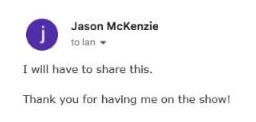
“Thank you for having me on the show!” and “I will have to share this.”
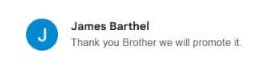
“Thank you Brother we will promote it.”
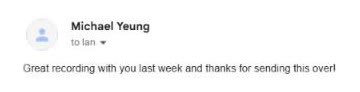
“Great recording with you last week and thanks for sending this over!”
What came after
Guests have introduced Ian to people in their networks.
It goes both ways. Ian makes intros for his guests too.
One guest asked Ian for an intro straight after his episode.
That intro turned into revenue-share talks.
Ian's not the only one doing it
Ian showed a Perth mastermind host how he runs his show.
The host got excited and bought his own lapel mics.
Now he records a short clip of each member at his monthly events.
In his words, it's “very fun”.
He did this before the kit existed.
It works even if
- You have no audience.
You don't need one. The guest is the point.
- You've never hosted a thing.
Your guest came to tell their story. You ask and listen.
- You're an introvert.
It's just you and your guest, online.
As Ian says, “there's nothing else to do but talk”. - You're not techy.
The Claude Skills do the editing and the uploads.
- Your clients are overseas.
It's all online.
- Your business is different.
A clinic, an agency, a consultancy or a software company.
If your clients are worth a real conversation, it fits.
What you get
The walkthrough
The SOPs
Claude Skills
Ian's Claude Skills
The same skills Ian built for our own show.
They edit your episode and turn it into social media content.
Then they upload it everywhere.
Ian's SOPs
The steps Ian follows for every episode, written down.
The recorded walkthrough
Ian takes you through the whole system.
Pick, invite, talk, and let the skills do the rest.
Watch it once, then run your first week.
Instant access: a download and a video.
$47 USD
Who it's for
This is for you if:
- You're very good at what you do, but you have no exposure.
- You'd rather talk to the right people than pitch strangers.
- Your best clients are worth a real conversation.
It's not for you if:
- You want to start a podcast agency.
- You want to chase downloads and sponsors.
What it costs, and what waiting costs
The kit is $47 USD.
If one guest becomes a client, the $47 won't matter.
Waiting costs more.
Another month of perfect messages.
Another month of “Seen”.
Your first yes in 72 hours, or every cent back
Send your first invites within 24 hours. If nobody says yes within 72 hours of sending them, we refund every cent.
We take the risk.
You send the invites.
Questions
How much time does it take?
One interview a week. The Claude Skills do the editing, the content and the uploads.
Which Claude plan do I need?
A paid Claude plan. The walkthrough shows you how to add the skills.
What gear do I need?
Ian records online, with Riverside.fm.
Do I record in person?
No. Ian records online.
Your guest joins from wherever they are.
What about time zones?
Ian is in Perth.
He's recorded with guests in the US, Canada and Europe.
You pick a time that suits you both.
Will my guests buy from me?
We can't promise that. Nobody honest can.
Here's what we've seen on Ian's show.
Some guests still chat with him and refer people.
And in some cases, they do business together.
A week from now
A week from now, one of two things will be true.
You're still writing the perfect message.
Still waiting for a reply.
Or your invites went out.
Someone you'd love to work with said yes to a chat.
And if nobody did, you got every cent back.
Without cold pitching anyone.
Even if you have no audience.
So you can sit across from the people you'd love to work with.
Without editing a thing yourself.
Even if you've never hosted a show.
So you can post a week of content from one chat.
Without feeling like a pest.
Even if you're an introvert.
So you can give first, and talk work after the recording.
You stop knocking on front doors.
You become the host people thank.
The Side Door Podcast
Ian's Claude Skills, Ian's SOPs and a recorded walkthrough · $47 USD
Your first yes within 72 hours of sending invites, or every cent back.

Ian
Sheefan Media
P.S. Send your first invites within 24 hours. If nobody says yes within 72 hours of sending them, we refund every cent.
P.P.S. You don't have a lead problem. You're knocking on the front door.